The Cherry Hill Neighborhood at Pickathon 2026
If The Woods is our daytime cathedral, Cherry Hill is its dark, mysterious sister. This neighborhood sleeps during the day, waking up after sundown to become a glowing, avant-garde wonderland on the ridge. Led by the PSU School of Architecture, Cherry Hill features massive, student-built structures that guide you through the festival’s most radical visual experiments. Today, we’re thrilled to reveal what’s rising on the ridge in 2026.
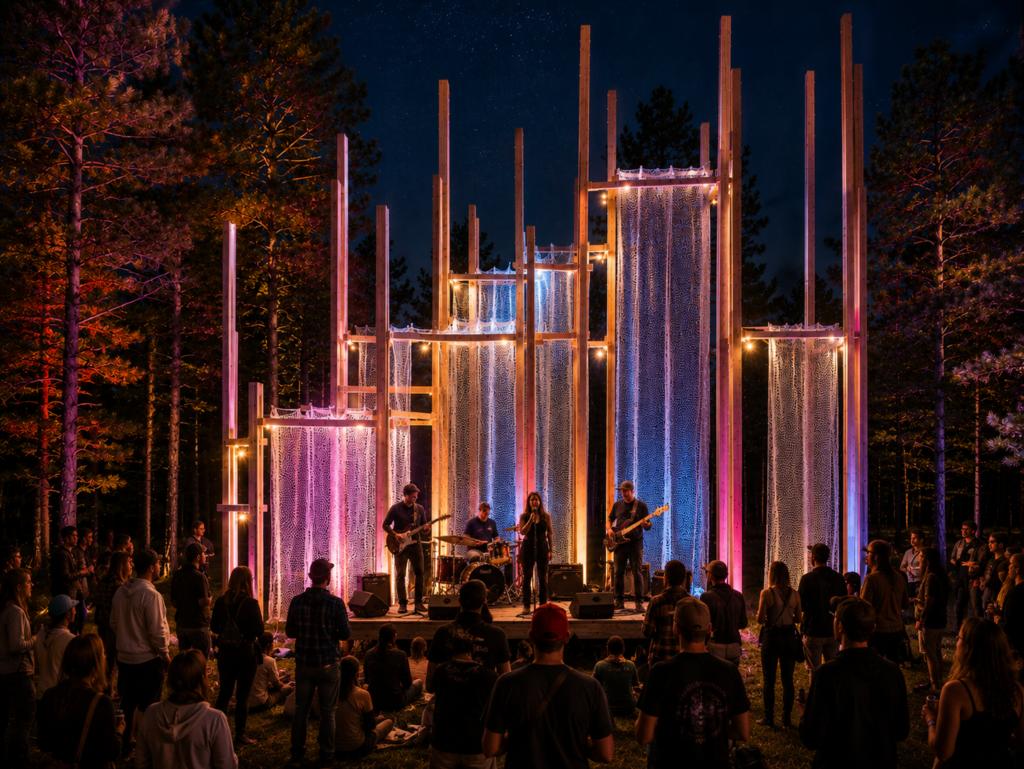
Nets, Waves, and Light
Continuing an enduring tradition that marries radical environmental responsibility with inspirational visual form, the Cherry Hill neighborhood will once again burst with evocative design and wildly innovative materials, courtesy of the creative minds at PSU School of Architecture.
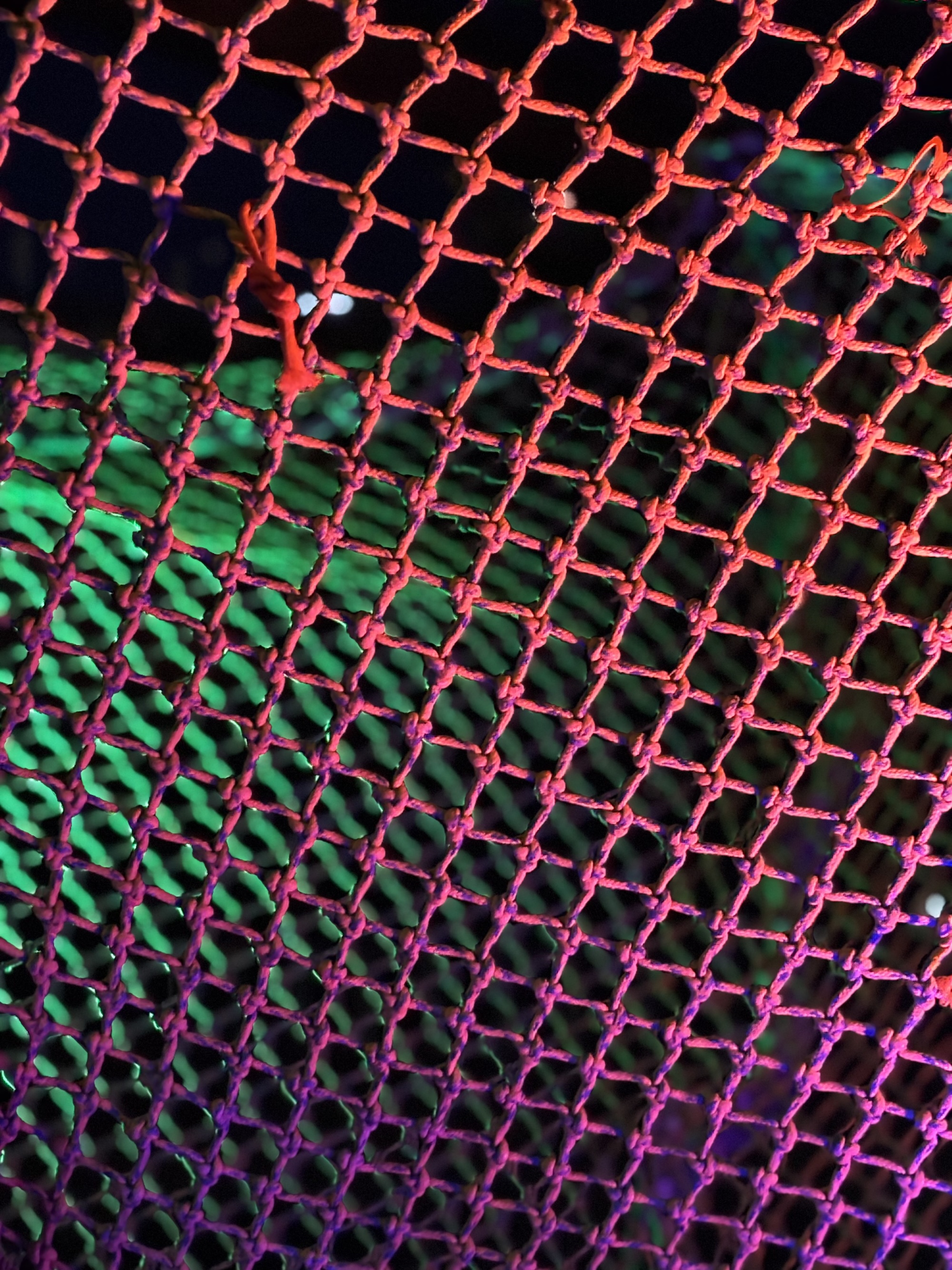
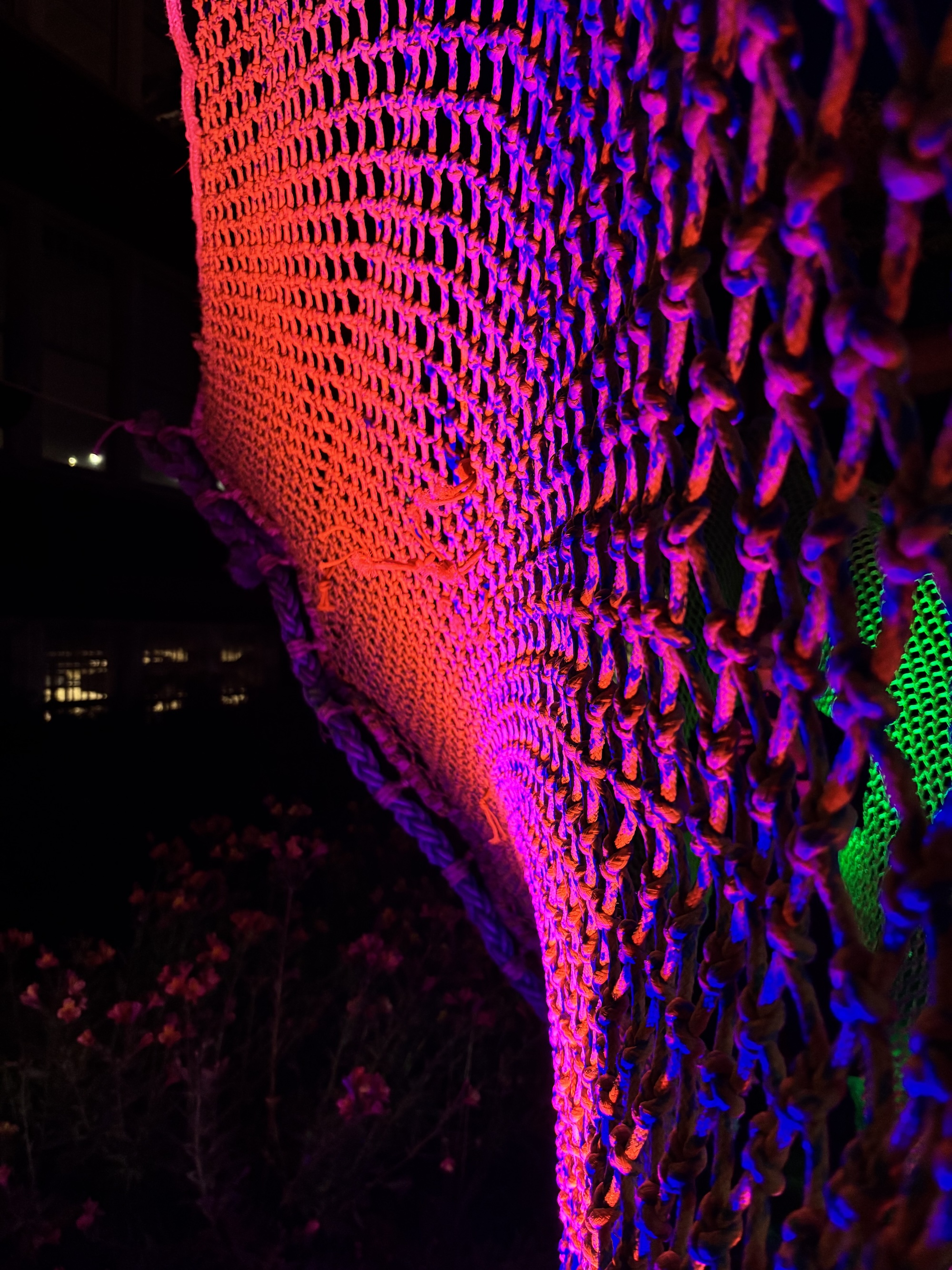
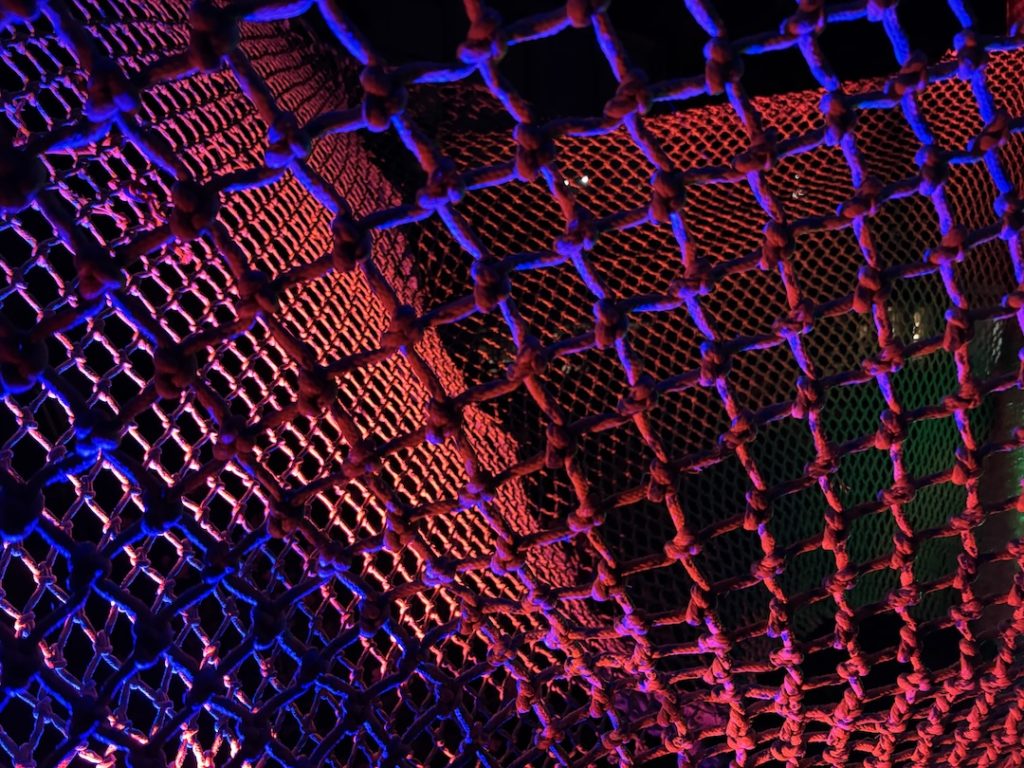
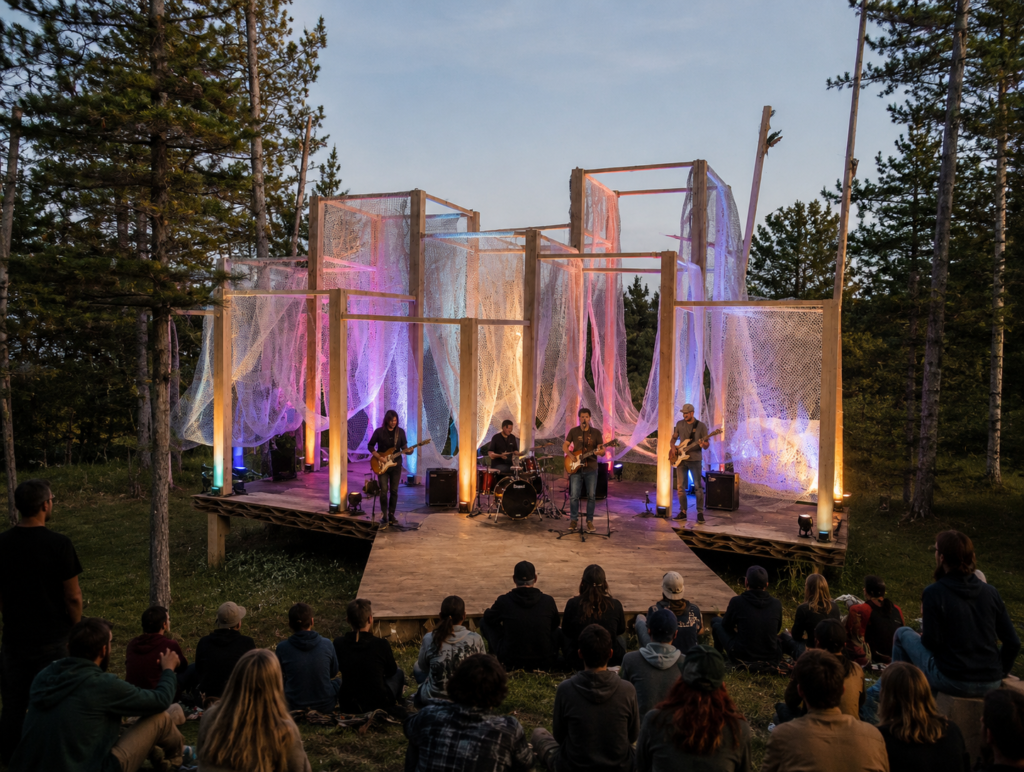
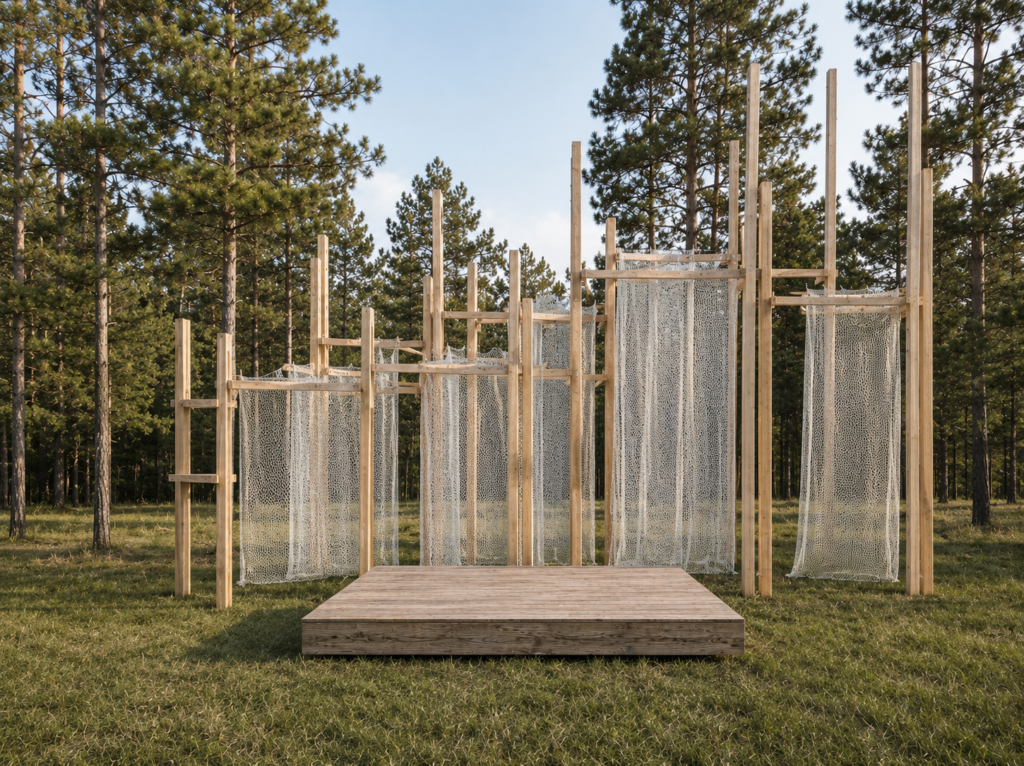
This year’s Cherry Hill theme is inspired by the power and rhythms of the ocean, and the nets that are at the heart of the fishing industry. In the ocean, fishing nets respond to the pulsing waves and currents deep under the water, taking on megalithic forms far below the surface. As the primary material for the 2026 Cherry Hill stage, disused fishing nets form cylindrical shapes on land, stretched and draped from a series of elevated towers reminiscent of carrelet fishing huts, intermingling with the tall trees behind the stage. The undulating fishing net surfaces, with their knotty textures, will catch and reflect light behind the performers, while strategically placed uplights showcase the large implied volumes. In the context of the festival, the ocean waves that once moved these weighty nets beneath the water symbolically translate into musical waves.
As light passes through the nets, the material catches reflections, shadows, and fleeting glimpses of movement. In the same way that water moves through a fishing net and eventually reaches the shore, sound waves move through the installation, pass through its layers, and reach the human body and consciousness.
The nets do not simply enclose space. They filter light, sound, views, and movement. They create moments of opacity and transparency, separation and connection, enclosure and openness.

Diversion Design-Build
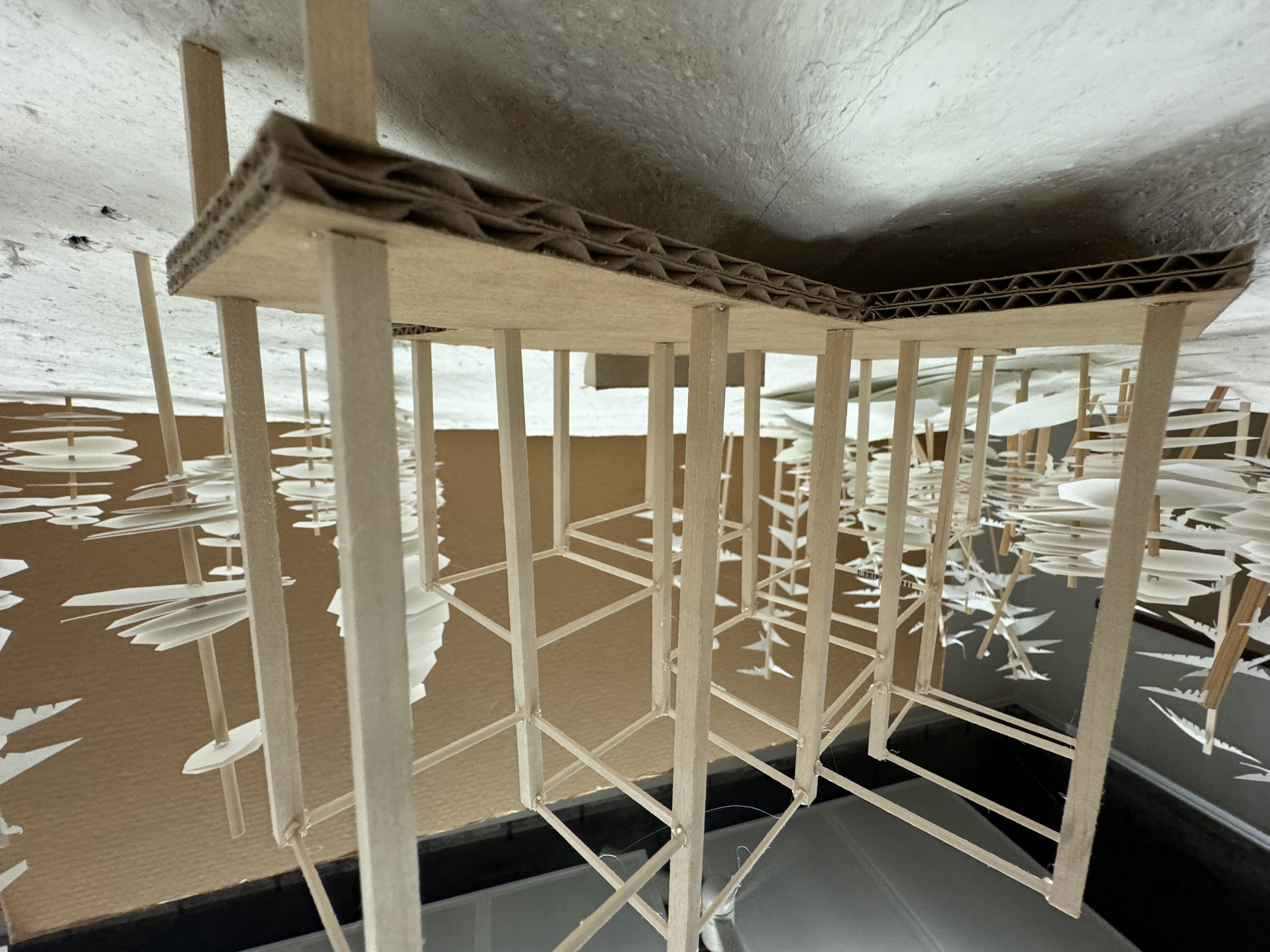
The 2026 Cherry Hill structure embodies the Diversion Design-Build concept, a design practice invented by professors and students at Portland State’s Architecture school, where the materials for the venue are temporarily diverted from their usual purpose in order to construct a breathtaking stage at the festival and then either moved on for recycling or put back into use. The goal: to create an ephemeral performance venue that leaves no trace on the land and creates as little waste as possible, but makes a lasting imprint in our memories.
The first instance of a Diversion Design-Build venue was the 2014 Treeline Stage, created solely from hundreds of shipping pallets, which went back to their usual purpose of transporting appliances and the like after the stage was dismantled. Subsequent iterations of the Treeline Stage, and later the Cherry Hill neighborhood, included giant cardboard tubes used for wrapping sheet steel, apple harvesting crates, large cable reels, dimensional lumber, and wooden trusses that ultimately became sleeping pods for veterans transitioning out of homelessness in Clackamas County.
A Global Purpose
This year’s Diversion Design-Build takes the concept of reuse in a new and dramatic direction. Thanks to the innovative maritime recycling nonprofit Net Your Problem, once the nets have served their purpose at Cherry Hill, they will be shipped to Ukraine to protect villages from drone attacks. The nets will go from a life of catching fish and providing a way of life for Oregon fishermen to catching drones, saving lives in a war zone. And in between, they will form a performance venue where the people of Pickathon will gather to experience a weekend of joy, beauty, music and togetherness.
A net is made through connection. Each individual strand depends on the others, creating a larger system of support, interdependence, and collective strength. In this way, the material reflects the values of community and gathering at the heart of the festival.
Design Team
Professor Travis Bell
Timothy Boscacci
Courtney Frederick
Russ Golubev
Isabelle Jones
Jake Muldoon
Anthony Westwolf
About the PSU School of Architecture
The Portland State University School of Architecture’s academic programs, which include a four-year bachelor’s degree, two-year professionally accredited Master of Architecture and three-year track of the Master of Architecture, emphasize focused study in architectural design, the humanities, tectonics and the profession. The rich, design-based curriculum prepares students for a career as a licensed architect while emphasizing the critical role of architects to make a positive impact on the built environment and communities in general. The Master of Architecture program concludes with the completion of a major design thesis study of individually inspired questions concerning architecture, culture and technology. PSU’s Graduate Certificate in Public Interest Design, the first of its kind in the United States, is also offered through the School of Architecture’s Center for Public Interest Design.
Neighborhood Partners
Social Impacts: Net Your Problem
Architecture: Portland State University School of Architecture
Structural Engineering: Catena Consulting Engineers
Builder: PSU Architecture students
Festival Partner: Creative Neighborhoods