Design: Mark Lakeman
Volunteers: City Repair Project
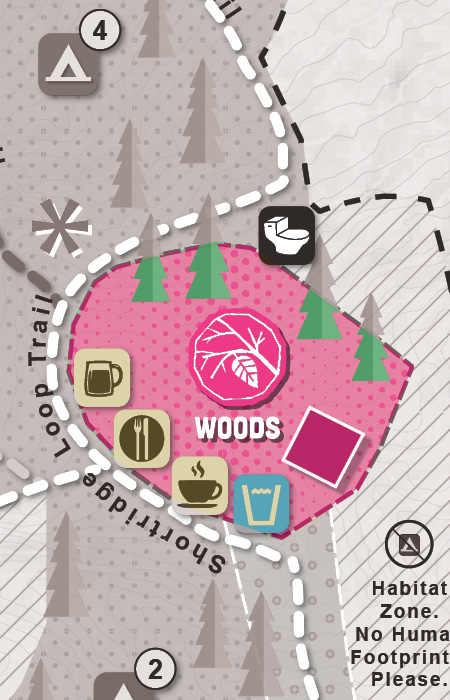
Tucked at the base of a natural wooded amphitheater, the Woods Neighborhood is iconic. Every year, we weave together trees and branches to create a stunning stage backdrop. With food, beverages, and free water available, it’s the perfect place to relax and enjoy the music surrounded by nature’s beauty.
In the Woods Neighborhood, architect-activist Mark Lakeman and a cohort of artists, builders, and volunteers transform Pendarvis Farm’s old-growth cathedral into a living artwork that both shelters and inspires.
Collaborative placemaking begins months before the first note is played: teams walk the logging road selecting fallen vine maples and salvaged trunks, then weave them on-site into seed-pod portals, wave forms, and floating stained-glass orbs that appear to hover between earth and canopy. Every contour is guided by hillside wind patterns and audience sight-lines, so the finished stage feels less like an object and more like a natural clearing discovered in the woods.
Because craft is culture, the build doubles as a Mentorship / Non-Profit Platform. Apprentices from regional trade schools, volunteers from the City Repair Project, and first-time festivalgoers work shoulder-to-shoulder with veteran timber framers, learning tool safety, hemp-rope lashings, and the art of turning raw trees into graceful structure.
During the festival, the adjoining Refuge hosts daily skill-shares and gives the floor to youth-led nonprofits amplifying environmental justice—proving that creative space can also be civic space. Finally, the neighborhood is engineered for Community Impact & Sustainability long after the last encore.
Honoring Pickathon’s pledge that “we can’t throw it away,” every component is tagged for a second life—ensuring the Woods Neighborhood is more than a stage. It’s an evolving ecosystem of artistry, teaching, and stewardship that radiates benefit all year long.
Design: Mark Lakeman
Volunteers: City Repair Project